Walk into any well-run facility and you'll find the peaceful scaffolding of an emergency situation control organisation resting behind day-to-day procedures. On normal days, it is undetectable. When alarm systems noise, those roles come to be the distinction in between a neat evacuation and a chaotic shuffle. Emergency situation wardens, deputy wardens, and primary wardens don't just comply with a list. They make judgments in changing problems, they connect under pressure, and they coordinate individuals that are terrified, stubborn, or just puzzled. Training is just how you turn good intentions into consistent performance.
This overview distills the practical core of warden training, including the nationally acknowledged PUA systems several organisations count on: PUAER005 Operate as Part of an Emergency Control Organisation and PUAER006 Lead an Emergency Situation Control Organisation. If you handle a facility, lead safety, or are entering a warden role for the very first time, you'll discover the requirements, routines, and side cases that shape genuine response.
What an emergency warden truly does
Titles vary by jurisdiction and industry, but the foundation is similar. Wardens survey their areas, initiate and support evacuations or shelter-in-place, aid susceptible passengers, and feed trustworthy information to the chief warden. They do not fight fires unless classified, educated, and secure to do so with first assault equipment, and also then, life safety and security comes first. In multi-tenant structures or stretching schools, wardens also become navigators, adjusting global plans to neighborhood floor quirks.
A typical misunderstanding is that fire wardens only take care of fires. In method, the emergency warden's remit covers medical occasions, bomb dangers, hazardous chemical releases, loss of power influencing important systems, hostile burglar events, and serious weather. The most effective fire warden training develops transferable skills: situational evaluation, risk-based decision production, disciplined interaction, and leadership under stress.
The training backbone: PUAER005 and PUAER006
Australia's PUA Public Safety Training Package supplies a structured strategy to warden proficiency that lots of organisations adopt or mirror. PUAER005 Run as Part of an Emergency Control Organisation concentrates on wardens' functional abilities: checking out the setting, applying treatments, managing residents, and reporting up the chain. PUAER006 Lead an Emergency Control Organisation is the chief warden stream, where sychronisation, approach, and multi-agency interfacing come to the fore.

If you are scoping a fire warden course or chief warden course, search for providers that clearly align to these devices. Providers typically list them as PUAER005 training course or PUAER006 course, sometimes blending the older code PUAER with PUA units in marketing. The web content must cover the essence of "run" and "lead," not just recite policy. You want scenario-driven method, not a slideshow of regulations.
Roles, hats, and rapid recognition
Warden identification looks enchanting until you remain in a smoke-filled passage and the lawn sprinklers have decreased presence to a fog. Clear duty recognition aids passengers choose whom to comply with. Numerous workplaces make use of coloured safety helmets or hats, vests, and lanyards. There is variant, but the conventions are commonly comprehended:
- Red for fire wardens or location wardens, including floor wardens. White for the chief warden or chief emergency warden, sometimes with a black red stripe for the deputy chief. Yellow or orange for interactions or emergency treatment functions, depending upon the site.
If your group asks what colour helmet a chief warden puts on, respond to simply: white. That chief warden hat colour helps marshal authority at a glimpse. Whatever your system, make it consistent throughout all tenancies if you share a structure. Laminated wallet cards that show the colour code and radio networks save time in blended environments.
Baseline capacity for every single warden
Competent wardens aren't superheroes. They are disciplined generalists with a few difficult skills. A solid warden course must develop these capacities and validate them with useful assessment.
Wardens discover to evaluate their locations in mins, not twist. They look for persons needing assistance, doors that open up the wrong way, and canal most likely to block. They discover to utilize extinguishers just where trained and safe to do so, however just as notably, when to close a door and proceed. They don't come to be firemens in a weekend. They come to be decisive overviews that keep people approaching life safety.
Radio self-control issues. Brief transmissions, logical order, and no freelancing on networks. The chief warden requires clean inputs that enable them to make a strategy, not 3 versions of the very same rumor. Excellent emergency warden training develops this habit with tension drills. The first time you exercise radio brevity must not be throughout a real discharge with fire staffs en route.
Chief warden management, in practice
The chief warden duty is less about individual heroics and even more concerning synthesis. PUAER006, usually called the chief warden training, concentrates greatly on these capability:
- Establish the Emergency Control Organisation swiftly. Assign wardens to gaps, verify communications, and set an incident clock. Eight mins seems like infinity throughout a fire alarm. Utilize it well. Triage information. Separate validated monitorings from speculation. Notes on a whiteboard or a straightforward digital log keep a shared picture visible. Choose the best technique. For a tiny electric fire in a contained space, a neighborhood discharge could be adequate. With a smoke migration or chemical launch, you pivot to a sector-based or full building emptying. Severe climate could call for shelter-in-place. The most effective chief wardens withstand autopilot. Interface with -responders. Fire crews will take command on arrival, however your brief matters. Layout, plant shutoffs, persons unaccounted for, place of the last recognized threat, and any kind of impaired or mobility-impaired residents who need rescue help are gold. Coordinate the go back to normal. Presented re-entry, create confirmation, and debrief capture. It is appealing to "all clear" as well rapidly, particularly under production stress. Resist it.
On paper, these are uncomplicated. In genuine occurrences, you will certainly make trade-offs under time stress. The chief fire warden who has actually rehearsed those selections will certainly act with clearness when secs matter.
Fire warden requirements in the workplace
Numbers depend upon the dimension and complexity of your site. Small single-storey workplaces may run well with a chief warden, a deputy, and one warden per 20 to 50 passengers. Multi-storey or intricate centers require one warden per area or area, with deputies for redundancy. Change work and leave rosters suggest you require extra names than a cool org chart suggests. I suggest a 1.5 multiplier on head count to cover lacks. If 6 wardens are needed on paper, train nine.
Training cadence is an additional demand commonly downplayed. Induction is insufficient. Set up refresher emergency warden training at least every year, with scenario variation. Tabletop workouts can preserve muscle memory between complete discharges. Revolve scenarios: kitchen area fire, gas leak, medical emergency situation blocking a stair, blocked egress as a result of refurbishment. People remember what they do, not what they listen to once in a classroom.
Fire warden training demands and the law-adjacent reality
Jurisdictions set baseline responsibilities, commonly referencing requirements like AS 3745 or its local counterparts. Those criteria explain the emergency plan, the emergency control organisation, and the training rhythm. They rarely explain your unpleasant mezzanine storage space cage, the forklift battery charger edge, or the slim staircase everyone forgets when they worry. Bring the requirement to life by walking the website with your wardens quarterly.
A common compliant fire warden training program includes hazard identification, alarm system kinds and definition, evacuation routes, setting up locations, use of fire extinguishers, and communication methods. Include the site-specific web content that often tends to be forgotten: after-hours access, crucial safes, handicapped refuge factors, door safety and security overrides, and any type of plant that needs to be closed down manually. If you run laboratories or workshops, consist of the details chemical or process threats and the means air flow systems engage with smoke control.
Evacuation, from drill to reality
Evacuation is deceptively simple on a diagram. Individuals don't act like arrows. They gather belongings, they search for good friends, they take photos. Some freeze, some say, and some sprint. The job is to transform that human tangle right into flow.
One of the most effective drills I ran as a chief warden consisted of a grown blockage generally stair. The front-of-house group did what lots of teams fire warden hat colour do: they attempted to require the acquainted course. The flooring warden, trained to expect the unexpected, rerouted web traffic to the second stairway and informed those at the back to preserve a consistent rate. We shed perhaps 30 secs on the whole, however a lot more notably, we showed the second egress held capability under load.
For multi-storey buildings, do not flood the staircases. Stage the launch by floors to stay clear of bottlenecks. Teach wardens to sweep laterally initially, then move toward the stairway, checking that fire doors lock behind them. Smoke spread frequently traces via the doors individuals wedge open for ease. You desire the behavior of shutting behind you so instilled that it holds under stress.
Persons requiring assistance
Every work environment consists of individuals who need assistance throughout evacuation, permanently or briefly. Props, late maternity, anxiety conditions, post-surgery restrictions, and language obstacles all issue. Your warden training program need to consist of an easy, respectful method to identify needs and pre-assign buddies. Refuge factors with two-way communication allow a controlled handover to fire crews when stairways are not workable.
Be cautious with discharge chairs. They serve, but only when wardens are educated and confident. Practice on the real stairs you will certainly utilize, with a heavy mannequin or prepared volunteer, under regulated problems. In a real occurrence, you do not want the very first descent to disclose an unpleasant touchdown geometry you really did not anticipate.
Using first attack firefighting equipment
The line is intense: life safety and security over residential property every time. Extinguishers and fire coverings get time and avoid small fires from expanding, but they are not a commitment and they ought to never be used to chase after lessening returns. If trained, measure utilizing PASS: draw, purpose, squeeze, sweep. Keep a clear egress route at your back. Stop if your intestine claims the fire is bigger than a wastebasket or you can really feel warm pushing you back. I have actually seen sympathetic staff lose hard secs to a persistent electric fire that never must have been challenged.
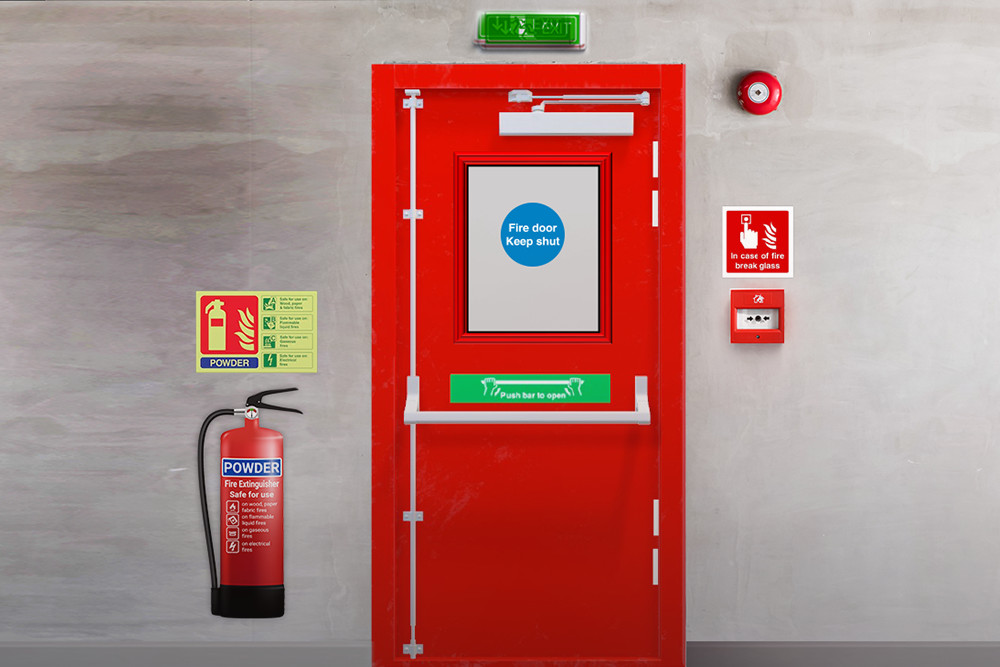
Include tactical information in your fire warden training. Not all extinguishers are equivalent. CO2 for electric fires, foam or completely dry chemical for flammable liquids, water hazes for normal combustibles, and a company "no" on water for stimulated equipment. Increase your site plan with the kind and area of each extinguisher and include it in the warden pack.
Communication that reduces through
Wardens reside on 2 channels: the radio web for command and the human network for residents. On the radio, much less is extra. Usage call signs, offer place initially, after that condition, then request. Instance: "Level 3 West - noticeable smoke in print room - evacuating south stairway - 2 flexibility helps." Your chief warden currently knows where, what, and who requires help. Occupants don't need that degree of detail. They require tranquil, direct phrases: "Leave possessions, follow me, make use of the south stair, hold the handrail." Repeat. The tempo becomes a metronome that calms individuals and maintains them moving.
One behavior worth exploration is the closed-loop verification. If the chief warden appoints a task, the warden repeats it back. "Replicate, sweep Level 2 east wing, report clear." It sounds aggressive in a quiet meeting room. In a noisy https://writeablog.net/seannalzbx/puafer006-course-management-discharge-coordination-and-post-incident-review hallway, it prevents 2 wardens from duplicating work while no one checks the web server room.
The chief warden's event rhythm
When the alarm system trips, the chief warden's psychological clock begins. An easy rhythm offers well:
- Verify the signal and establish the initial reaction. Single-zone activation in a well-known nuisance area may require examination. Several areas or noticeable smoke activates evacuation. Establish communications and designate protection. Validate that each floor or zone has an energetic warden. Fill up gaps with available personnel or deputies. Stabilize the circulation. Straight wardens to control stairways, reroute from obstructions, and stay clear of cross-traffic. Interface with exterior responders. Provide a crisp quick on arrival, then shift to support setting, taking care of owners at the assembly area and preserving accountability. Close out attentively. Just come back when accredited, record what worked and what really did not, and capture follow-ups with owners and due dates.
That rhythm lines up closely with the analysis standards in PUAER006 lead an emergency situation control organisation, however it additionally fits the unpleasant, iterative truth of live incidents.
Selecting a warden course that actually develops competence
Course brochures commonly look the same. When you examine a fire warden course or chief fire warden course, request specifics. Just how much time is useful? Do participants use radios? Do they go through several scenarios, including non-fire emergency situations? Will certainly the evaluation confirm that participants can operate as component of an emergency control organisation under time stress, or does it just examination recall?
The best emergency warden course carriers see your site and customise. They change content for your building systems, from smoke control zones to accessibility control overrides. They consist of bomb hazard and questionable package methods for workplace towers, and chemical spill treatments for laboratories. They practice climate shelter techniques for areas with serious tornados. They reveal you where your strategies are brittle.
Drills that matter, not drills for show
Treat drills as an investment, not a conformity tax. Rotate the day and time so you reach all shifts. Tell lessees ahead of time that you will have onlookers. Location those onlookers at choice factors: staircase entryways, squeeze factors, setting up location rollout. Time from alarm system to initial movement, to stair engagement, to setting up responsibility. If your structure has numerous staircases, step lots distribution. The numbers tell you where your strategy leaks.
After the drill, take fifteen minutes for a stand-up debrief with wardens. Ask what they saw and what they struggled with. Catch 3 activities, not twenty. Assign owners. Comply with up prior to the next drill. The loophole from observation to action is the difference between performative safety and security and operational resilience.
Integrating clinical response and security
Fire is visceral. Several genuine disruptions are medical or security associated. Wardens need to recognize just how their duty converges with emergency treatment and protection. In a cardiac arrest, the chief warden may collaborate crowd control and lift concern for paramedics while the emergency treatment group runs the resuscitation. In a hostile intruder scenario, the strategy changes to "escape if safe, hide if retreat is not feasible, and as a last resource, disrupt." That sits alongside, not inside, standard fire evacuation. Your plan should make clear that calls the method and how messages travel without creating harm.
Security systems can help or prevent. Doors that default to locked on power loss can trap people otherwise set up with egress top priorities. Train wardens on handbook overrides and consist of safety in drills. I have actually seen a perfect emptying stumble when the gates declined to release after a partial power failing, causing backflow at the major exit. One wrench on the mechanical release would have solved it, yet just security understood where the wrench lived.
Documentation people in fact use
Wardens won't flip through a 90-page strategy during an emergency situation. Give them concise task cards and a pocket map. Laminated A5 cards work well: on one side, the function list, and on the various other, the map with egress paths, extinguisher kinds, sanctuary factors, and assembly locations. For primary wardens, include a log sheet template. Basic devices make it through stress.
Keep your records living. When upkeep moves an exit indicator or building and construction closes a hallway, update the map and quick wardens. Link updates to the permit-to-work process so changes feed right into the emergency situation strategy, not shock it.
Competency upkeep: beyond ticking the box
Formal recertification cycles differ, yet proficiency discolors without usage. Two brief refresher courses a year, among them practical, maintain the side. Mix in micro-drills: a five-minute radio telephone call examination on a Wednesday morning, a fast move method for a brand-new warden, a walk-through of the cellar fire pump room with the upkeep team. These treats of practice build up. If a warden moves duties or floors, re-train them for the brand-new context. A skilled warden in a new design is a novice with self-confidence, which can be risky.
Culture: why people comply with wardens
Systems matter, however individuals follow human beings. Wardens that predict calm, that understand names, and that move with objective pull others along. I collaborated with a flooring warden that repeatedly walked the long way around at 4 p.m. each day, talking with the laboratory technologies and the reception group. Throughout an emptying months later, those exact same individuals trusted her instructions without disagreement. Knowledge made authority feel legit. You gain that lengthy before the alarm.
Common challenges and how to prevent them
Most failures I see fall into a few patterns. Overreliance on a single stairway or exit, bypassing the alternate route also when the strategy claims or else. Understaffed warden teams, particularly on late or very early changes. Radios that run out fee or configured inconsistently. Assembly areas selected for comfort rather than safety and security, such as straight across from the major entry where -responders require to stage. And the timeless, doors wedged open, quietly ruin smoke control style. A quarterly walk with a doubtful eye catches these. Build the habit.
Where PUAER005 and PUAER006 suit the larger picture
The PUAER005 run as part of an emergency control organisation system produces a baseline for wardens that will certainly execute the strategy. The PUAER006 lead an emergency situation control organisation system elevates chief wardens to prepare, coordinate, and adjust. Incorporated, they provide a language and framework your team can share. That typical structure is important when personnel relocation in between websites or when a multi-tenant structure runs a joint drill.
Look for training service providers who instruct the spirit of those units, not just the letter. Proficiency displays in the unplanned moments: a lift stuck between floorings throughout emptying, a parent that intends to come back for a failed to remember bag, a smoke alarm during a thunderstorm that masks sirens. Those are the sides where training makes its keep.
A small warden startup checklist
- Confirm your warden team headcount covers changes, leave, and special events. Issue recognition, radios, and work cards. Test radios weekly. Walk every route and staircase. Close doors, check locks, and map choke points. Run one drill with a prepared obstruction. Step time and flow. Debrief, fix 3 things, and routine the next practice.
The last metre
Emergency feedback lives in details gauged in metres and secs. The last metre to the staircase landing, the last individual signed in the bathroom, the last seconds spent describing the path as opposed to pointing and moving. Wardens who educate to that scale supply calm in the noisy middle of an actual case. Whether you wear the red warden vest or the white chief warden hat, invest in training that values the truth of your website, speaks clearly, and methods till excellent behaviors are automatic.
If you are constructing your program, slow to PUAER005 for wardens and PUAER006 for primary wardens, pair it with site-specific drills, and construct a society where security isn't a poster but a practiced craft. The day you need it, individuals will certainly follow you since you have led them there many times previously, with care, clearness, and a plan that functions when the plan meets the fire alarm.

Take your leadership in workplace safety to the next level with the nationally recognised PUAFER006 Chief Warden Training. Designed for Chief and Deputy Fire Wardens, this face-to-face 3-hour course teaches critical skills: coordinating evacuations, leading a warden team, making decisions under pressure, and liaising with emergency services. Course cost is generally AUD $130 per person for public sessions. Held in multiple locations including Brisbane CBD (Queen Street), North Hobart, Adelaide, and more across Queensland such as Gold Coast, Sunshine Coast, Toowoomba, Cairns, Ipswich, Logan, Chermside, etc.
If you’ve been appointed as a Chief or Deputy Fire Warden at your workplace, the PUAFER006 – Chief Warden Training is designed to give you the confidence and skills to take charge when it matters most. This nationally accredited course goes beyond the basics of emergency response, teaching you how to coordinate evacuations, lead and direct your warden team, make quick decisions under pressure, and effectively communicate with emergency services. Delivered face-to-face in just 3 hours, the training is practical, engaging, and focused on real-world workplace scenarios. You’ll walk away knowing exactly what to do when an emergency unfolds—and you’ll receive your certificate the same day you complete the course. With training available across Australia—including Brisbane CBD (Queen Street), North Hobart, Adelaide, Gold Coast, Sunshine Coast, Toowoomba, Cairns, Ipswich, Logan, Chermside and more—it’s easy to find a location near you. At just $130 per person, this course is an affordable way to make sure your workplace is compliant with safety requirements while also giving you peace of mind that you can step up and lead when it counts.